Developing tailored
solutions together.
How we solve industrial challenges efficiently and economically through additive manufacturing and creative thinking.
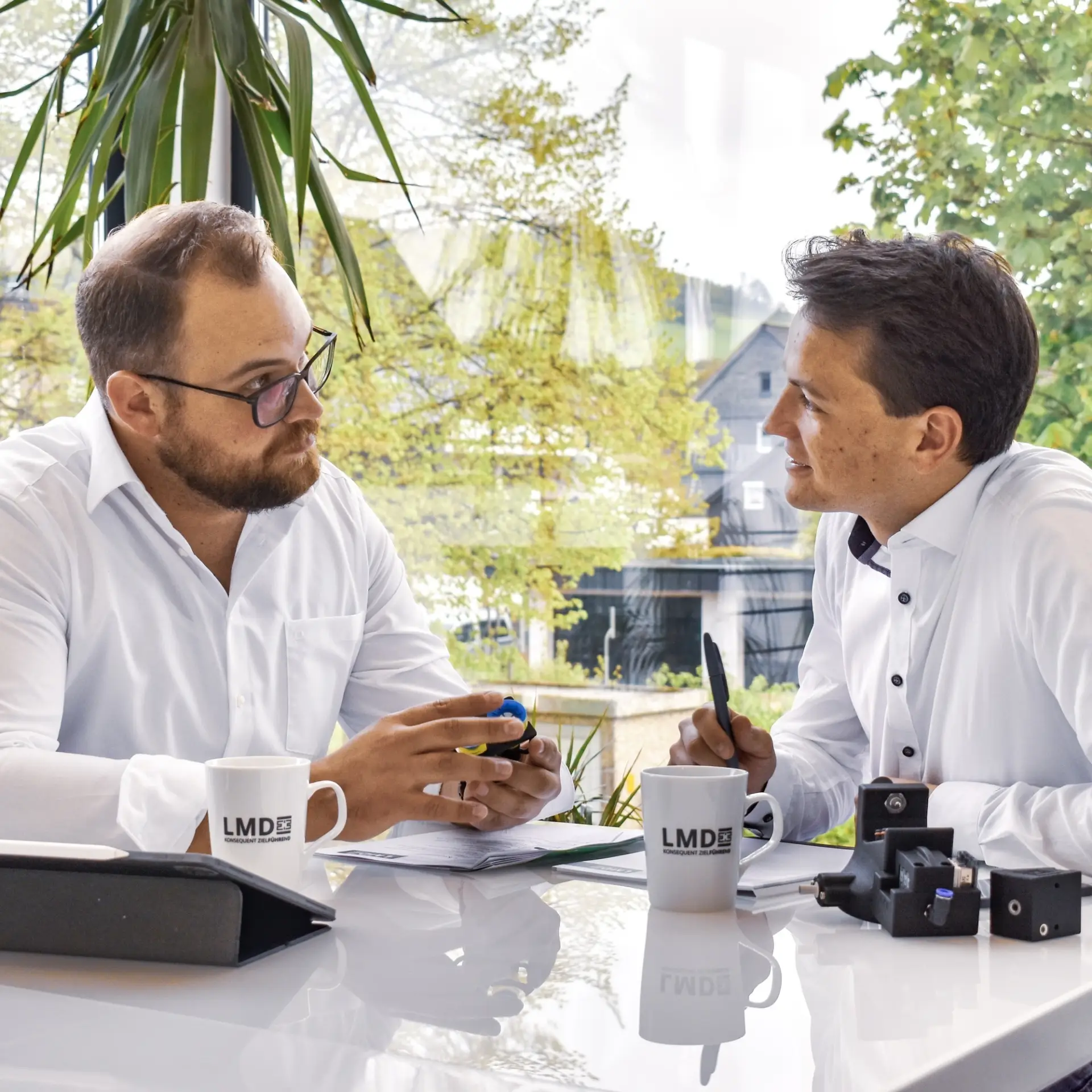
In our workshops, we provide targeted support in developing new approaches for your applications.
In our design workshops for additive manufacturing, we teach in a practical way how to design components for 3D printing with function and manufacturability in mind. This is not just about geometries, but about function integration, material selection and making targeted use of the design freedom of additive manufacturing.
These are complemented by our concept workshops for industrial challenges. Here we jointly analyse specific challenges from your production and look at the entire process. The aim is to question existing approaches and develop new, economically viable solutions.
The combination of technical know-how, cross-industry experience and creative thinking results in concepts that not only work technically, but can also be implemented in practice.
For us, standards are the foundation – but not a limit. Driven by our ambition to think in new ways, we develop solutions precisely where no suitable approaches exist on the market and technical limits have been reached.
Every development follows a structured and certified process. This ensures that your application is tailored exactly to your requirements from the first idea to the finished solution and that risks are minimised at an early stage.
Based on a comprehensive analysis, we first develop a function-integrated concept. This forms the basis for the design and implementation of your customised solution.
Challenges in design engineering.
Additive manufacturing has long ceased to be a new process. Nevertheless, in many cases there is a lack of basic understanding of how to design components for manufacturability and fully exploit the potential of the technology – particularly because these topics are often still barely covered in conventional training.
Additive manufacturing will not replace existing processes, but complements them as a further tool for finding solutions. The right mindset is crucial: function integration, freedom of geometry and moving away from conventional component thinking are at the heart of our workshops.
Our goal is to increase your efficiency sustainably – through well-thought-out design, function-integrated solutions and the targeted use of additive manufacturing.
- Lack of functional thinking
Components are considered in isolation rather than as an integrated solution within the overall process - Insufficient use of design freedom
Potential such as function integration, lightweight design and complex geometries remains untapped - Transfer of conventional design principles
Components are designed as if for machining rather than optimised for additive manufacturing - Excessive complexity in assemblies
Many individual parts lead to greater assembly effort and a higher risk of errors - No cost-effectiveness assessment
Additive manufacturing is not used specifically where it creates real added value - Insufficient process perspective
The focus is on the individual component rather than its function within the entire production process
1.0
New approaches instead of standard thinking.
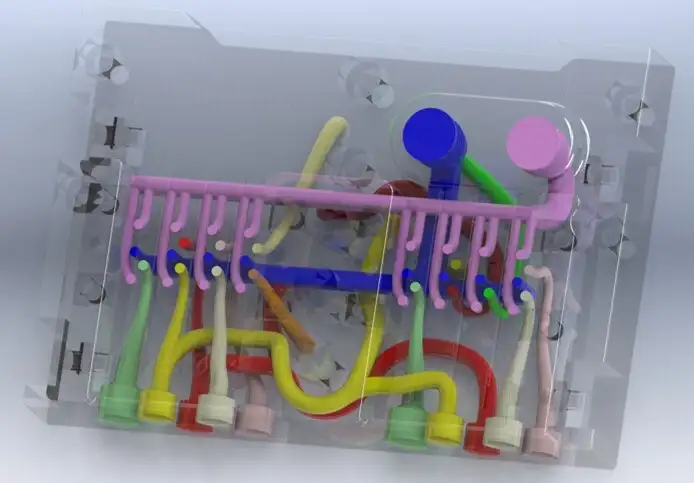
Integrated channels
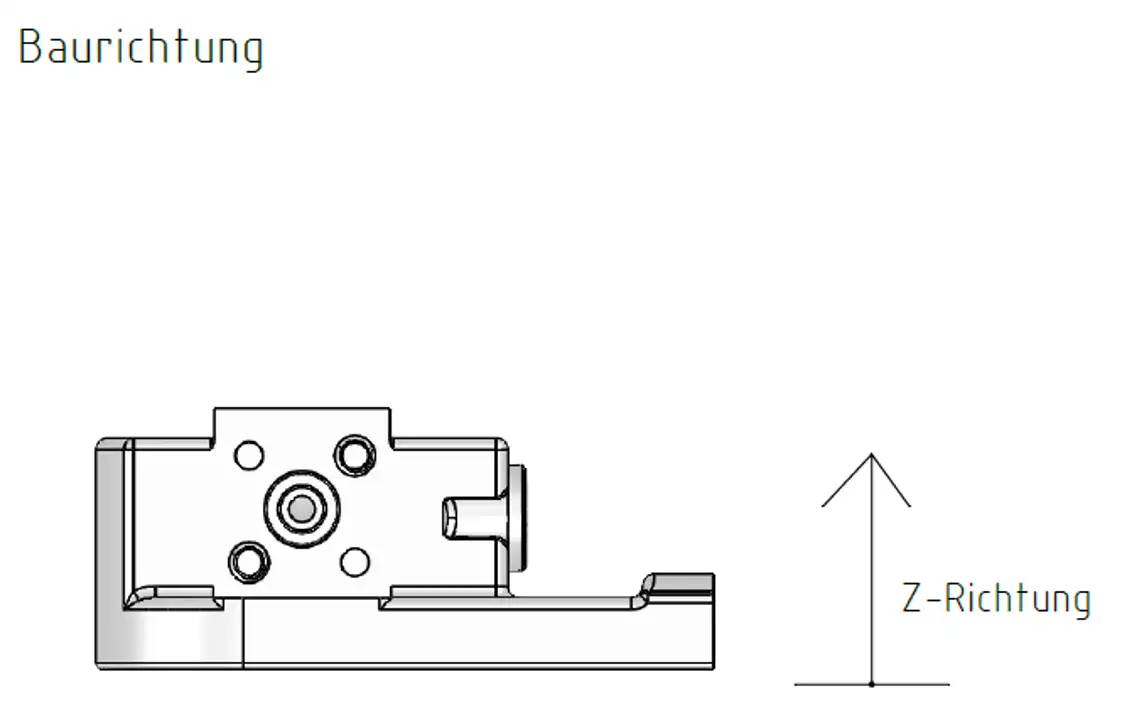
Finishing drawings
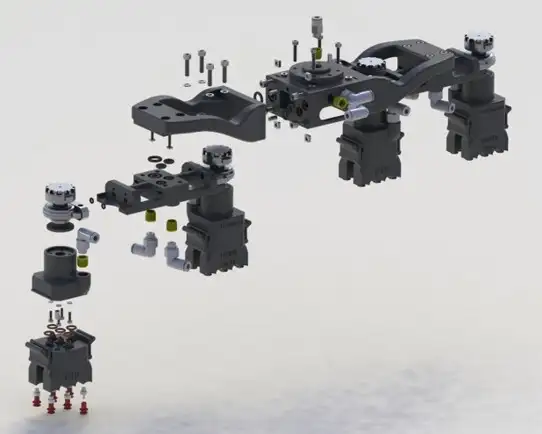
Combination options
Typical questions we answer
- Where does 3D printing really pay off, and where not?
- Which AM process suits my component (FDM, SLS, SLA, …)?
- Why are parts often printed 1:1 instead of being redesigned?
- How strong, heat-resistant and durable are SLS components?
- Which connections and combinations make sense?
- Which tolerances and surfaces are realistic?
- Why do prices vary so much?
- When is laser sintering the right choice?
- How do I correctly design internal channels, chambers and hygienic components?
- Are parts “ready to use” after printing?
Your added value
- New, cost-effective approaches to industrial-grade lightweight design for rigid & flexible structures at the highest quality level
- Building in-house know-how to secure your competitive advantage
- Faster design processes
- Fewer queries between customer and supplier
- Extensive creative design freedom and innovative approaches for complex requirements
- Compact function integration in parts & components
- Hygienic design for optimum cleanability
- Food-compliant materials/surfaces
Benefit from the many possibilities of 3D printing. We give you the expertise you need.
Contents
- Fundamentals and possibilities of additive manufacturing
- Advantages and disadvantages of selective laser sintering
- Identifying applications for additive manufacturing independently
- Design tips & tricks, LMD factory standard, design guidelines
- Function integration / mechatronic combination options
- Materials, surfaces, downstream processes
- Jointly developing a solution approach for your task
3D printing applications
- Simple or complex industrial functional parts, components & housings
- Grippers & automation components
- Tools & mould trays
- Fixtures
- Custom-made products & one-off parts
- Models / prototypes
- Integration of mechatronic solutions
Info
- Exclusive to your company
- At our premises or as an in-house workshop
- Run & supervised by experienced professionals
- Every participant receives a training certificate and an exclusive LMD design handbook
2.0
From first idea to finished design.
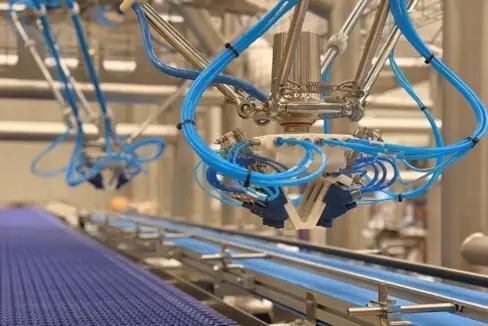
Grippers for the food industry
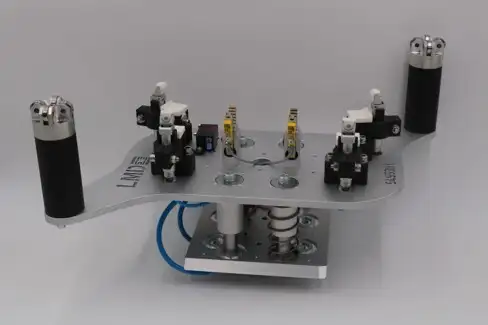
Part removal handling for injection moulding machines
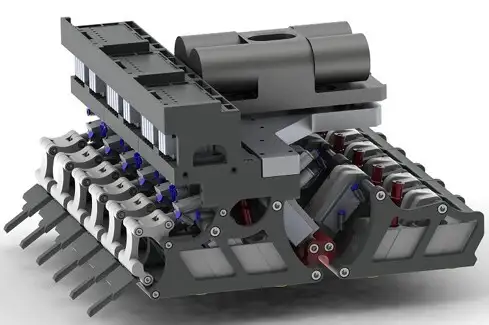
Mechatronic assemblies
Does this sound familiar?
- Are your assemblies or grippers reaching their limits, too heavy or unsuited to the dynamics of your system?
- Does your system concept not fit the available space, or are your processes too complex for economical automation?
- Is assembly only possible with a lot of experience and high effort?
- Are your quotations not competitive, for example due to oversized systems or too many robots?
- Is a project failing because of a missing key component?
Your benefits
- Shorter development times and less coordination between all project participants
- Compact, high-performance solutions by integrating several functions in one assembly
- Savings in cost, energy and time through optimised design and reduced complexity
- Greater process reliability and system availability thanks to custom key components and well-designed interfaces
- Less dependence on staff through automation of complex processes
- Hygienic, food-safe solutions
Optimised geometries, smoothed surfaces and suitable materials for sensitive applications - Scalable, practical concepts
- In-house know-how to assess and use additive manufacturing independently
- Sustainability and resource efficiency through material-efficient design and lower CO₂ emissions from optimised processes
- Continuous improvement process (CIP): identifying potential for improvement and jointly developing workable solutions
Developing innovative, cost-effective concepts through creative thinking and targeted use of additive manufacturing.
Contents
- Status quo analysis and definition of objectives
- Identification of potential and risks
- Holistic process review
- Development and evaluation of possible solutions
- Function integration and lightweight design
- Creation of initial concepts and sketches
- Integration of electronics and sensors
- Selection of suitable drive concepts
- Definition of a scalable workflow
- Evaluation of cost, energy and time savings
- Documentation of results & concepts
- Definition of next steps
3D printing applications
- Simple or complex industrial functional parts, components & housings
- Grippers & automation components
- Tools & mould trays
- Fixtures
- Custom-made products & one-off parts
- Models / prototypes
- Integration of mechatronic solutions
Info
- Exclusive to your company with all project participants
- Held at your premises or ours
- Delivered & supported by experienced professionals